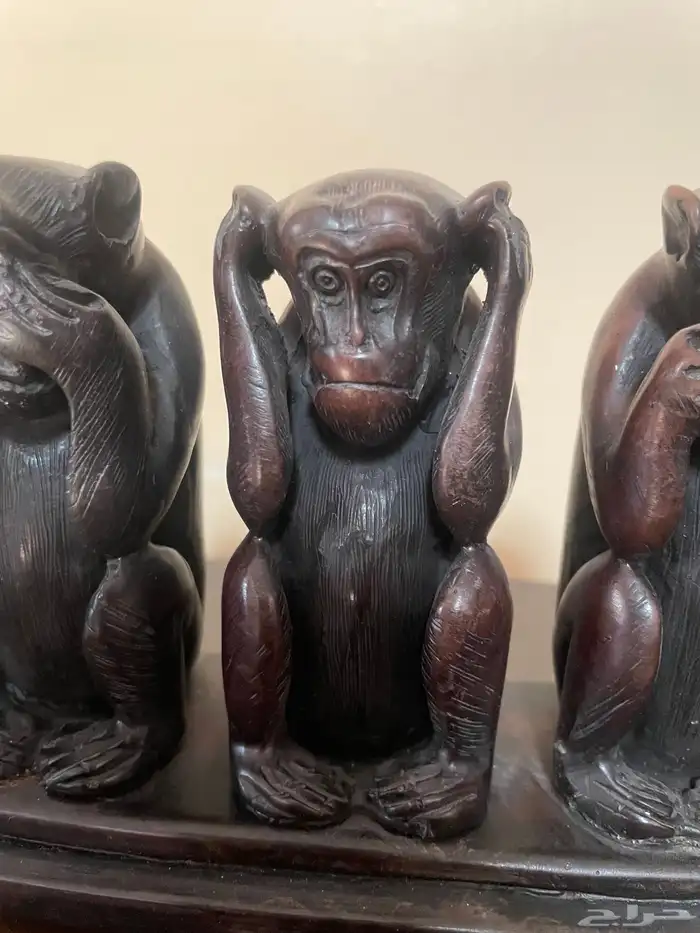
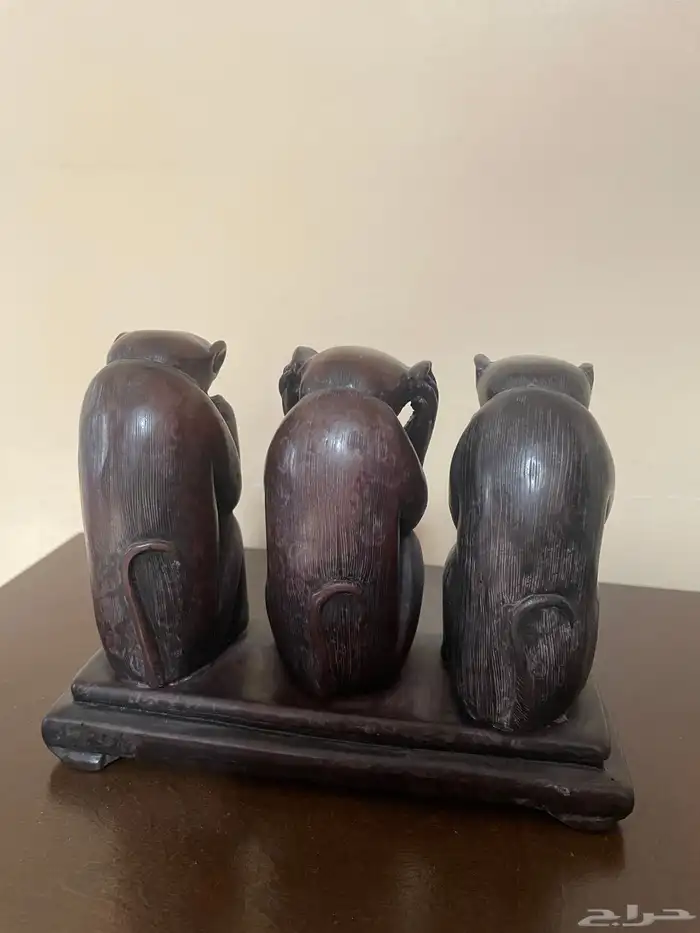
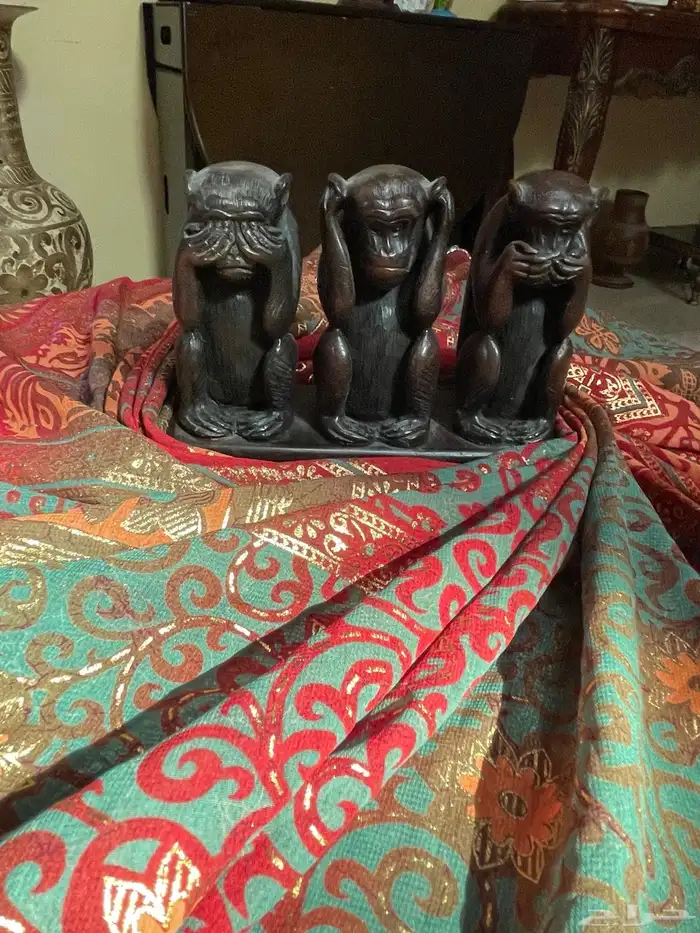
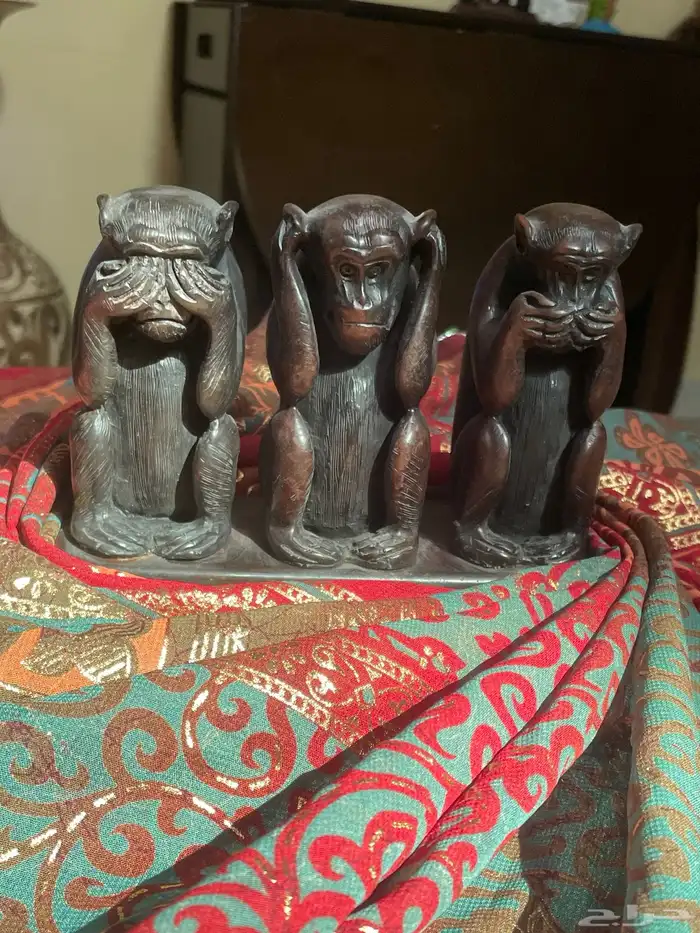
A unique sculpture of the "Three Wise Monkeys," a Japanese pictorial maxim that embodies the principle "see no evil, hear no evil, speak no evil".
The three monkeys are named Mizaru (covering his eyes), Kikazaru (covering his ears), and Iwazaru (covering his mouth).
The origin of the maxim is often associated with a 17th-century carving at the Tōshōgū Shrine in Nikkō, Japan.
The proverb is a reminder to be of good mind, speech, and action.
The phrase "saru," which means monkey in Japanese, is a play on the names of the monkeys, as "zaru" is a negative conjugation of the verbs "to see," "to hear," and "to speak".
The sculpture appears to be hand-carved from a single piece of wood, with a dark, ebonized finish on a wooden base
Weight: 1.100 g
Length 17 cm
Width 6.5 cm
Height 12.5 cm
للمهتمين بالتراث الياباني~
تمثالاً ياباني اثري يجسد"القرود الثلاثة الحكيمة"، وهي مقولة يابانية تصويرية تُجسّد مبدأ "لا أرى شرًا، لا أسمع شرًا، لا أتكلم شرًا".
القرود الثلاثة هي ميزارو (يغطي عينيه)، وكيكازارو (يغطي أذنيه)، وإيوازارو (يغطي فمه).
يُرتبط أصل هذه المقولة غالبًا بمنحوتة من القرن السابع عشر في ضريح توشوغو في نيكو، اليابان.
يُذكّر هذا المثل بالعقل السليم، والكلام السليم، والفعل السليم.
عبارة "سارو"، التي تعني قردًا باليابانية، هي تلاعب بأسماء القرود، حيث أن "زارو" تصريفٌ سلبيٌّ للأفعال "يرى"، و"يسمع"، و"يتكلم".
التمثال منحوت يدويًا من قطعة خشب واحدة، بلمسة نهائية داكنة من الأبنوس على قاعدة خشبية.
الوزن: 1٫100 قرام
الطول: 17 سم
العرض: 6٫5 سم
الارتفاع: 12٫5 سم